
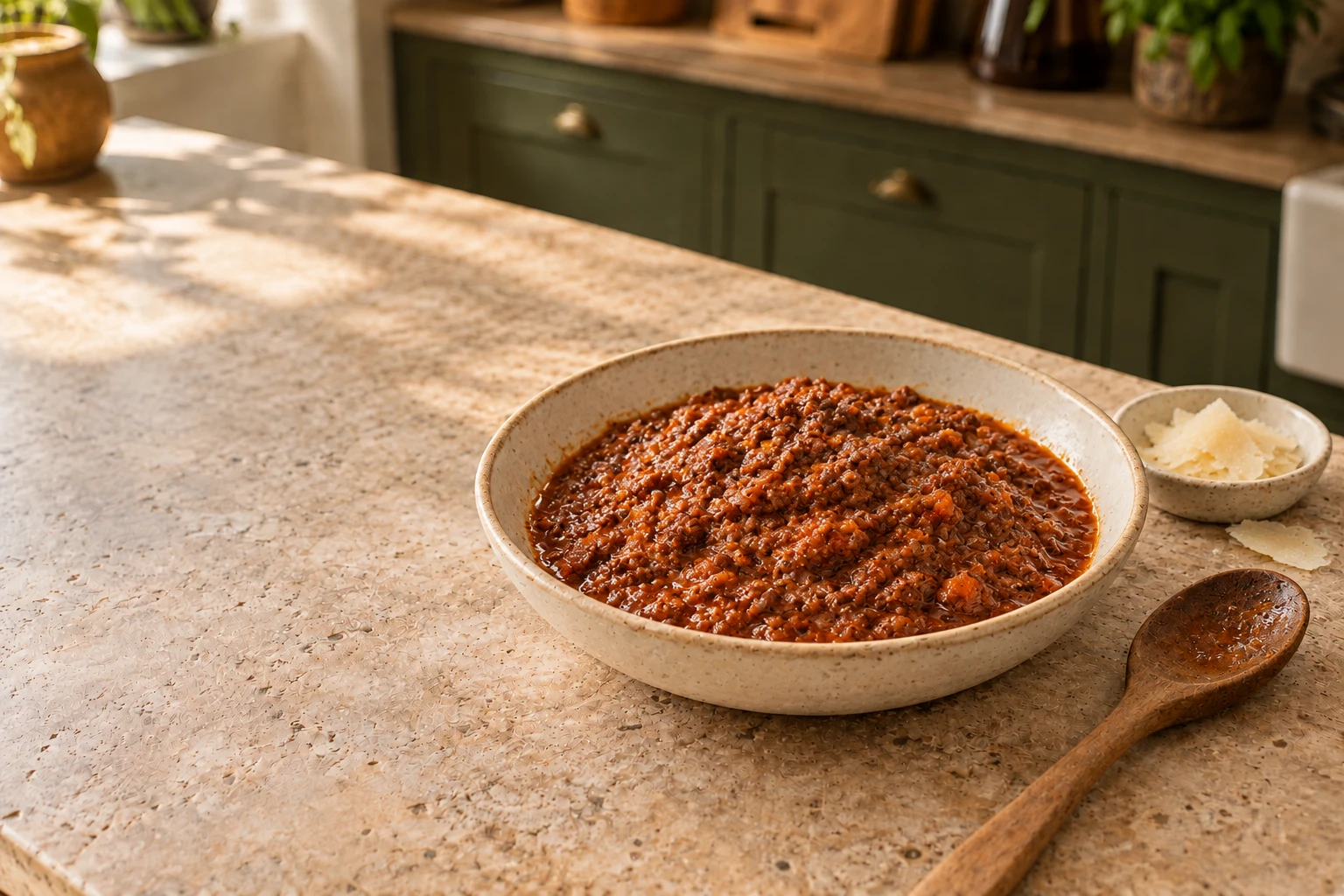
Ragù alla Bolognese v1.0
Let this ragù with beef, pork, unsmoked pancetta, soffritto and Parmesan simmer slowly. Keep it juicy and rich for pasta or lasagne. This version has no wine and usually no milk.
Jump to the recipe ↓AI-generated illustration.
Ingredients now shown for 4 people.
Optional: keep the screen awake while following the recipe. Uses more battery.
Favourites are saved in this browser, without signing in.
SAPIDUS · Flavour. Curiosity. Joy of food.
Ragù alla Bolognese v1.0
4 people · About 4½ hours total; 3½–4 hours simmering
Equipment: Heavy-based casserole and frying pan
Quantities follow your selection; time and temperature do not scale automatically.
Ingredients
Meat
- 350 g beef mince, preferably 18–20 % fat
- 150 g pork mince
- 50 g unsmoked pancetta
Soffritto and frying
- 90 g yellow onion – provisional amount
- 75 g carrot – provisional amount
- 60 g celery – provisional amount
- 1½ garlic cloves
- 13 g butter
- ½ tbsp olive oil
Tomato and flavour
- 30 g tomato purée
- 500 g passata – choose this OR the alternative below
- 400 g whole peeled tomatoes, crushed by hand – alternative to passata
- 2 dl meat stock, preferably low-salt – provisional starting amount; more water/stock as needed
- 1 bay leaves
- 15–20 g Parmesan rind – provisional amount
- ¼ tsp black pepper
- Salt to taste
- 0.5–1 dl whole milk, optional; the standard version omits it
Allergens: Milk from butter and Parmesan. Stock may contain celery; check the ingredients.
Method
Prepare the soffritto
Finely chop onion, carrot and celery with a knife or short pulses in a food processor. The vegetables should retain some texture rather than become a purée. Heat butter and olive oil in the casserole and cook the vegetables over medium-low heat for 12–15 minutes until completely soft without browning. Add garlic for the last 1–2 minutes.
Cook the pancetta
Add finely chopped unsmoked pancetta and render its fat for about 5 minutes.
Brown the meat
Brown beef and pork in batches in a separate hot frying pan. Develop good colour without drying out. Transfer to the casserole. Deglaze the pan with a little stock and add the juices.
Cook the tomato purée
Stir in tomato purée and cook gently with the meat for about 3 minutes.
Build the ragù
Add either passata or hand-crushed tomatoes, about three quarters of the starting stock, bay leaves, Parmesan rind and pepper. Stir together.
Simmer for 3½–4 hours
Simmer very gently over extremely low heat with the lid slightly ajar. Stir regularly, especially near the end. Check liquid and add water or meat stock gradually as needed. There is no fixed total liquid quantity: pot, heat and lid determine evaporation. The ragù should stay juicy and rich and must never boil dry.
Milk is optional
The standard version omits milk. If using it, add with about 20 minutes remaining and let it cook in gently.
Finish
Remove bay leaves and Parmesan rind. Season with salt and pepper and preferably rest for 10–15 minutes before serving.
https://sapidus.no/en/oppskrifter/ragu-alla-bolognese
About portions and timing
Cuisine: Italian-inspired
Estimated timing: about 15 min preparation · about 240 min cooking · about 15 min resting. These times are estimates for the basic method and have not been measured in the kitchen. Follow the method and any time ranges above.
Tick ingredients as you prepare them and steps as you finish them.
0 items checkedMethod
Finely chop onion, carrot and celery with a knife or short pulses in a food processor. The vegetables should retain some texture rather than become a purée. Heat butter and olive oil in the casserole and cook the vegetables over medium-low heat for 12–15 minutes until completely soft without browning. Add garlic for the last 1–2 minutes.
Add finely chopped unsmoked pancetta and render its fat for about 5 minutes.
Brown beef and pork in batches in a separate hot frying pan. Develop good colour without drying out. Transfer to the casserole. Deglaze the pan with a little stock and add the juices.
Stir in tomato purée and cook gently with the meat for about 3 minutes.
Add either passata or hand-crushed tomatoes, about three quarters of the starting stock, bay leaves, Parmesan rind and pepper. Stir together.
Simmer very gently over extremely low heat with the lid slightly ajar. Stir regularly, especially near the end. Check liquid and add water or meat stock gradually as needed. There is no fixed total liquid quantity: pot, heat and lid determine evaporation. The ragù should stay juicy and rich and must never boil dry.
The standard version omits milk. If using it, add with about 20 minutes remaining and let it cook in gently.
Remove bay leaves and Parmesan rind. Season with salt and pepper and preferably rest for 10–15 minutes before serving.
Get to know the spices in this dish
About this version
The basic method is well tried, but the listed vegetable, stock and Parmesan amounts are provisional. The tomato amount has been corrected to either 1,000 g passata or 800 g whole tomatoes in the original batch for 8 portions. The meat mixture is 70/30.
Good to know before you cook
Parmesan without the rind
For the original 8 portions, stir in 20–30 g grated Parmesan near the end instead of the rind. This quantity is provisional; adjust to your chosen serving count.
For pasta and lasagne
Toss ragù with freshly cooked tagliatelle and a little pasta water. For lasagne it must be juicy enough to contribute moisture; add a little stock if very concentrated.
Planned soffritto test
Both knife chopping and short machine pulses are approved in the basic method. The next test is to make two equal batches with the same ingredients, heat and cooking time, changing only the chopping method. Compare texture, sweetness and how well the vegetables blend into the sauce. This test has not been done yet.