
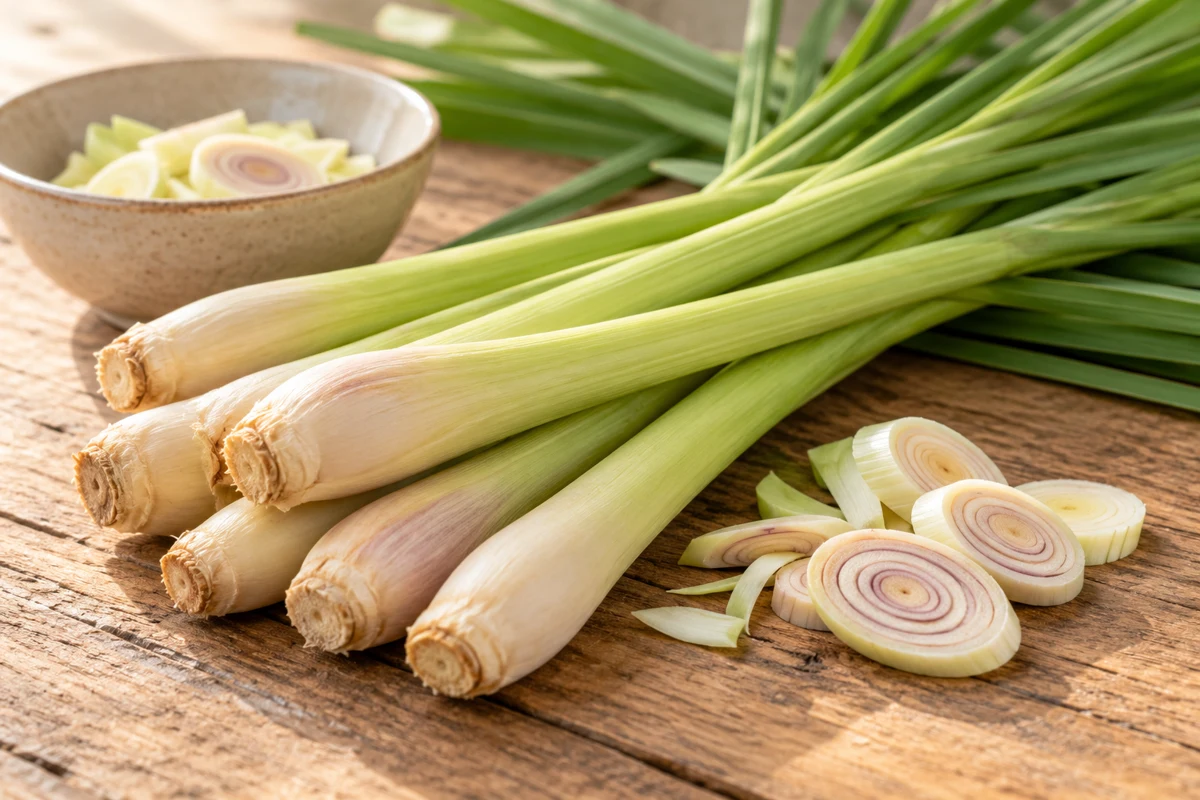
AI-generated illustration.
1046
What is it?
Lemongrass is an aromatic grass, Cymbopogon citratus. In the kitchen, we mainly use the lower part of the stalk.
«Fresh citrus aroma, though the dish may still need acidity.»
Background
The stalk has both tender and very fibrous parts. How much you can use depends on how you plan to prepare it.
Flavour profile
A fresh citrus aroma, but it is not the same as lemon juice. Add acidity if the dish still needs it.
Pairs well with
Curry, coconut soups, chicken, fish and marinades.
Lightly bruise the stalk and let large pieces infuse in soup before removing them. For paste, process the tender part very finely.
Did you know?
The upper parts of the leaves may be too tough to eat directly, although they can be used for infusing.
Common mistakes
Coarse, fibrous slices are unpleasant in a smooth sauce. Use pieces you can remove, or grind the tender part as finely as the dish needs.
Know the difference
Lemongrass adds aroma; lemon juice also adds clear acidity. One does not automatically replace the other.
Good to know
Larger removable pieces are practical for soup. Paste needs finer processing of the tender part.
Other flavours to try
Ginger, garlic, chilli and lime.
Try it with
Let a piece of lemongrass infuse in coconut milk and stock as a base for a small chicken soup.
When to go easy
Lots of lemongrass and lots of lemon can be too much together. Taste whether the pot needs more aroma or more acidity before adding anything.
Storage
Keep fresh leaves and stems chilled, and use them while they are in good condition. Keep dried herbs tightly closed somewhere dark and dry, away from cooker steam. Follow the advice on the packet too.
Try it yourself
Compare hot stock with and without bruised lemongrass, then add a little lime to distinguish aroma from acidity. A tasting idea for your kitchen, not a Sapidus test result.
1 claims linked to sources.
Source research was AI-assisted. Explore the background and follow the links to the sources.