
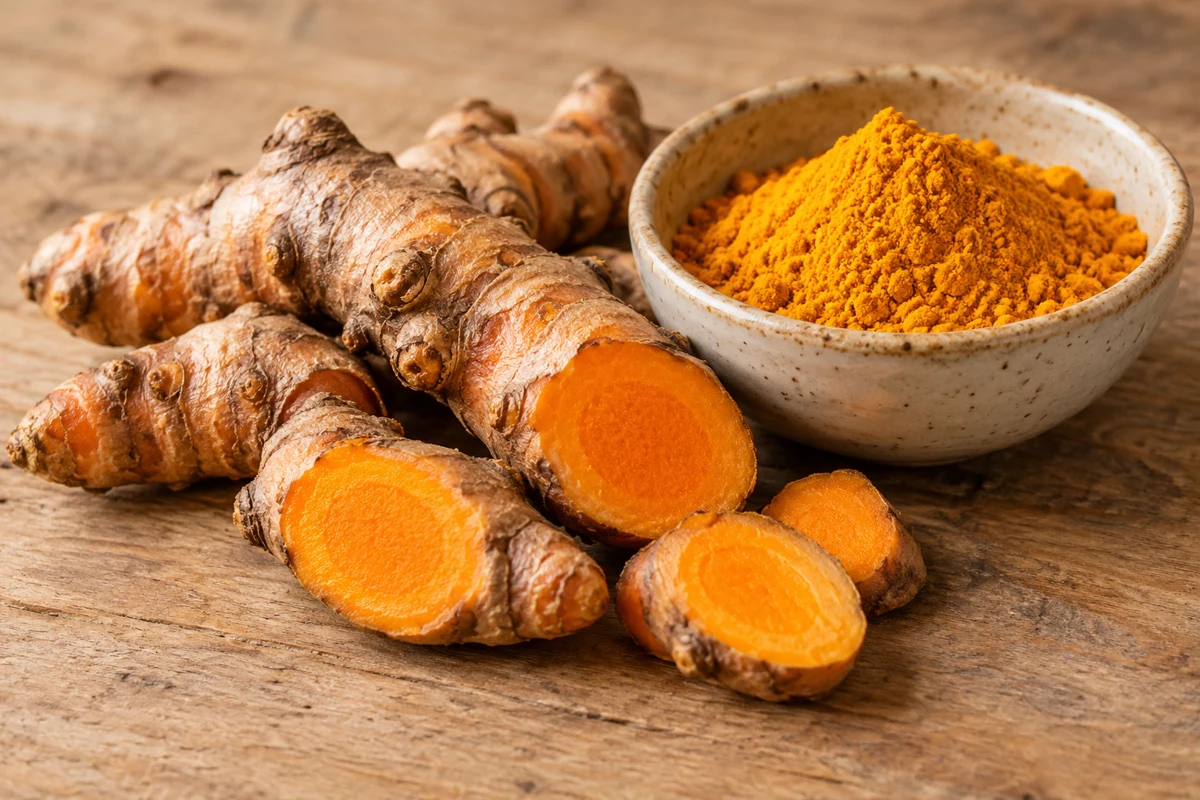
AI-generated illustration.
1031
What is it?
Turmeric is the rhizome of Curcuma longa, a relative of ginger. It is used fresh or dried and ground.
«Earthy, warm and slightly bitter.»
Background
The yellow powder is what you will usually find in the spice cupboard. Fresh turmeric also adds moisture and fibre, so use a recipe written for it.
Flavour profile
Earthy, warm and slightly bitter. The powder colours strongly but does not add chilli heat.
Pairs well with
Rice, lentils, cauliflower, soups and spice blends. Start with a little when it is supporting other flavours.
Stir the powder into the onion and oil before pouring in liquid. Keep the heat moderate, and stop before the spice scorches.
Did you know?
Turmeric and ginger belong to the same plant family, but give food different flavours.
Common mistakes
Too much powder can make a dish bitter and dusty. Add more for flavour, not just colour.
Know the difference
Turmeric is a single ingredient. Curry powder is a blend, and saffron gives a completely different aroma. Yellow is no guarantee of flavour.
Good to know
Measure into a small bowl before starting. Its colour makes it easy to overdo when sprinkling directly from the packet.
Other flavours to try
Ginger, coriander seeds, cumin and black pepper.
Try it with
Try a small pinch in a little lentil stew with onion and tomato. Taste before seasoning the rest of the pot.
When to go easy
To preserve the clean flavour of a mild fish soup, try turmeric in one ladleful first.
Storage
Keep the spice tightly closed somewhere dark and dry, away from cooker steam. Smell it before use, and buy only what you need. Follow the advice on the packet for fresh or processed products.
Try it yourself
Compare two small portions of rice, one plain and one with a small pinch of turmeric. Assess flavour and colour separately. A tasting idea for your kitchen, not a Sapidus test result.
1 claims linked to sources.
Source research was AI-assisted. Explore the background and follow the links to the sources.