
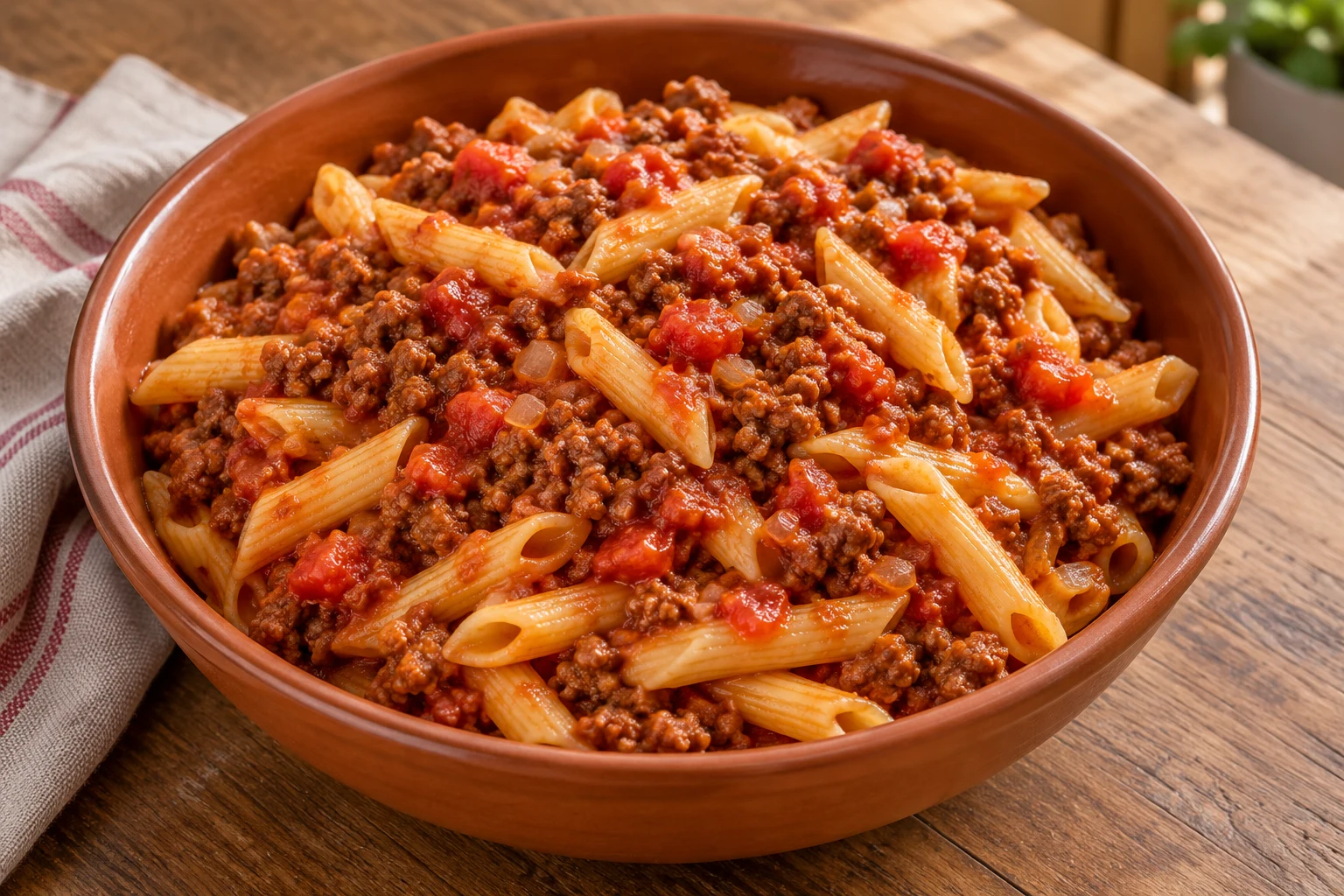
Pasta in a hurry – quick meat and tomato sauce
Meat and tomato sauce for when dinner needs to happen quickly. Brown the meat well, cook the tomato purée and add a little vegetable stock seasoning for plenty of flavour without slow cooking or a jar of pasta sauce.
Jump to the recipe ↓AI-generated illustration.
Ingredients now shown for 4 people.
Optional: keep the screen awake while following the recipe. Uses more battery.
Favourites are saved in this browser, without signing in.
SAPIDUS · Flavour. Curiosity. Joy of food.
Pasta in a hurry – quick meat and tomato sauce
4 people · About 20 minutes, slightly longer with extra chopping
Equipment: Wide frying pan and pasta saucepan
Quantities follow your selection; time and temperature do not scale automatically.
Ingredients
Pasta and sauce
- 400 g dry pasta
- 400–500 g beef mince
- 1 small yellow onion, finely chopped
- 2 garlic cloves, finely chopped
- 2 tbsp olive oil
- 2 tbsp tomato purée
- 400 g finely chopped tinned tomatoes or passata
- 1 tsp dried oregano
- ¼–½ vegetable stock cube, according to taste and product strength
- ½–1 tsp pul biber, optional
- Salt and black pepper to taste
- A little pasta water, only if needed
- Grated Parmesan to serve, optional
Adjusting the flavour if needed
- ¼–½ tsp sugar, optional – start with the smaller amount
- A tiny pinch of bicarbonate of soda, optional – start with just a few grains
Allergens: Wheat/gluten from ordinary pasta and milk from Parmesan. Vegetable stock cubes may contain celery and other allergens; check the packet. Pasta may contain egg.
Method
Put the pasta water on
Bring water to the boil for the pasta. Finely chop onion and garlic while it heats. Use a wide frying pan for the sauce so excess liquid evaporates quickly.
Brown the meat
Heat the olive oil over medium-high heat. Fry the mince for 4–5 minutes, allowing some crust to form before breaking it up. Continue as needed until cooked through; brown larger quantities in batches.
Build the flavour
Add onion and cook for 2–3 minutes. Stir in garlic and tomato purée and cook for about 1 minute. Reduce the heat if the garlic starts to darken.
Simmer the sauce
Add tomatoes, oregano, optional pul biber and the smaller quantity of vegetable stock cube. Crumble the cube directly into the sauce and stir until dissolved. Simmer uncovered for 6–8 minutes. Cook the pasta alongside according to the packet. Do not add extra water for the stock unless the sauce is too thick.
Balance the flavour
Taste first. If sharply acidic, add a few grains of bicarbonate of soda, stir, let the bubbling subside and simmer for about a minute before tasting again. Use very little: too much produces flat or soapy flavours. Add some of the optional sugar, simmer for 1–2 minutes and taste before adding more. Bicarbonate and sugar are adjustments if needed, not obligatory additions. Season with pepper, more stock cube if needed, and finally salt.
Combine and serve
Reserve a little pasta water before draining. Toss the pasta into the sauce and cook together for about 1 minute. Add pasta water gradually, only if needed. Serve with Parmesan if desired.
https://sapidus.no/en/oppskrifter/pasta-in-a-hurry
About portions and timing
Cuisine: International
Estimated timing: about 5 min preparation · about 15 min cooking. These times are estimates for the basic method and have not been measured in the kitchen. Follow the method and any time ranges above.
Tick ingredients as you prepare them and steps as you finish them.
0 items checkedMethod
Bring water to the boil for the pasta. Finely chop onion and garlic while it heats. Use a wide frying pan for the sauce so excess liquid evaporates quickly.
Heat the olive oil over medium-high heat. Fry the mince for 4–5 minutes, allowing some crust to form before breaking it up. Continue as needed until cooked through; brown larger quantities in batches.
Add onion and cook for 2–3 minutes. Stir in garlic and tomato purée and cook for about 1 minute. Reduce the heat if the garlic starts to darken.
Add tomatoes, oregano, optional pul biber and the smaller quantity of vegetable stock cube. Crumble the cube directly into the sauce and stir until dissolved. Simmer uncovered for 6–8 minutes. Cook the pasta alongside according to the packet. Do not add extra water for the stock unless the sauce is too thick.
Taste first. If sharply acidic, add a few grains of bicarbonate of soda, stir, let the bubbling subside and simmer for about a minute before tasting again. Use very little: too much produces flat or soapy flavours. Add some of the optional sugar, simmer for 1–2 minutes and taste before adding more. Bicarbonate and sugar are adjustments if needed, not obligatory additions. Season with pepper, more stock cube if needed, and finally salt.
Reserve a little pasta water before draining. Toss the pasta into the sauce and cook together for about 1 minute. Add pasta water gradually, only if needed. Serve with Parmesan if desired.
Get to know the spices in this dish
About this version
Home-tested on 18 October 2026. A tiny pinch of bicarbonate of soda and ½ tsp sugar balanced the acidity well in the test. Adjust to the tomatoes you use; both are optional.
Good to know before you cook
Bicarbonate and sugar do different jobs
Bicarbonate removes some of the acid and releases carbon dioxide. That is why the sauce may bubble. Sugar leaves the acid in place but makes it taste less sharp. Stop while the sauce still has some freshness.
Taste before salting
Stock cubes and Parmesan contribute salt. Start with little stock seasoning and wait until the sauce has reduced before salting. Cube strength varies between brands.
Quick sauce needs little extra liquid
Passata quickly produces a smooth sauce. Finely chopped tomatoes give more texture. Use a wide pan and add liquid sparingly to avoid a long reduction.
Adjust to the tomatoes
Acidity varies between tomato products. In the home test, a tiny pinch of bicarbonate of soda and ½ tsp sugar worked for four portions. Other tomatoes may need less or no adjustment.