
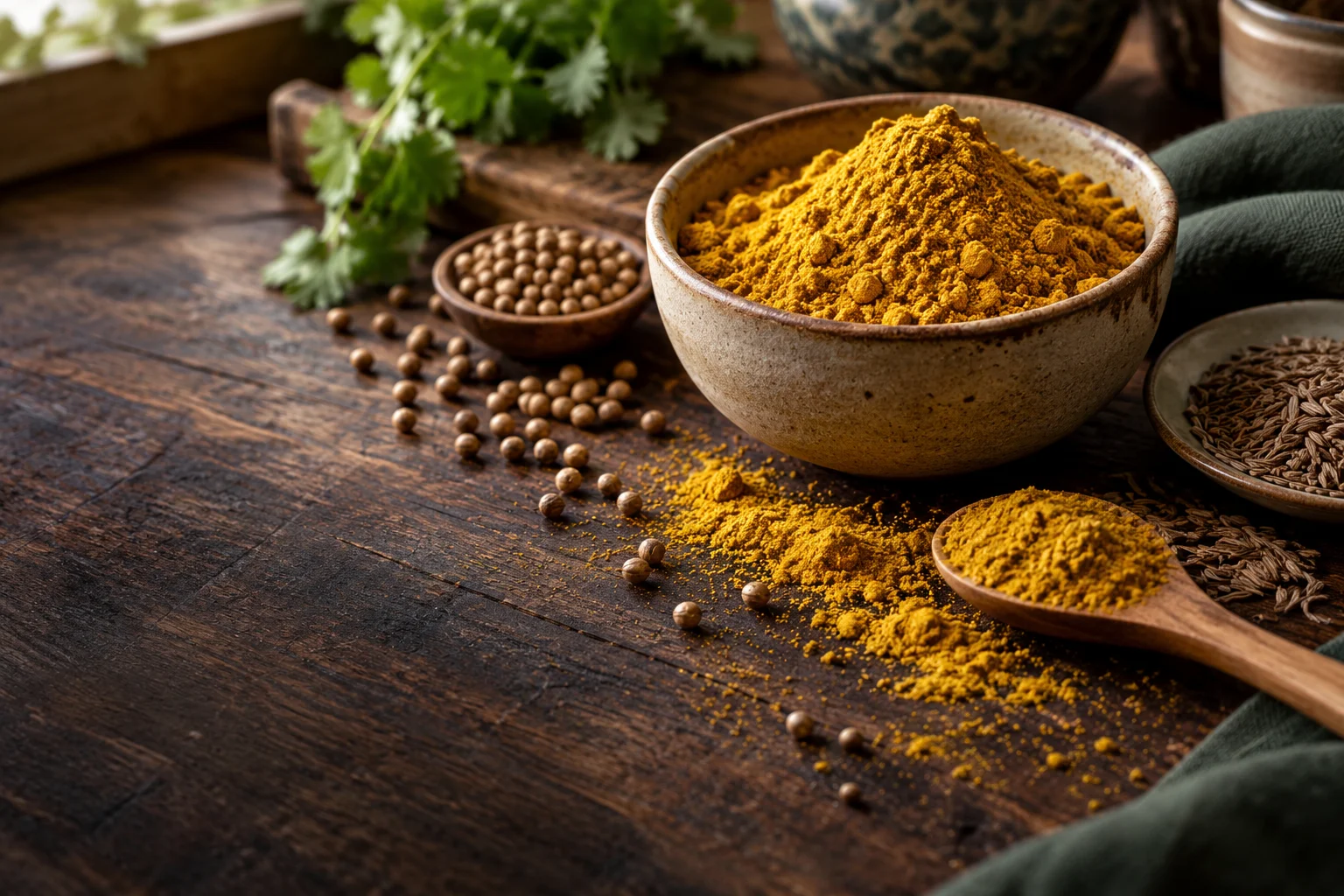
AI-generated illustration.
1028
What is it?
Curry powder is a blend of spices, not a spice from a single plant. Turmeric, coriander and cumin are common ingredients; others may include fenugreek, pepper, ginger and chilli. The composition varies. The yellow powder is a starting point for flavour, not a recipe for every dish called curry.
«Warm and earthy, with flavour that depends on the blend.»
Background
Here we mean the dry curry powder in the spice cupboard. Curry is also the name of many different dishes and cooking traditions. They deserve more room than a single spice guide can give them.
Flavour profile
Curry powder is often warm, earthy and aromatic, but smell the blend you have. Some taste more of fresh coriander, others of cumin or bitter fenugreek. A strong yellow colour tells you little about the amount of chilli. Read the ingredients before guessing how hot it is.
Pairs well with
Try curry powder in chicken soup, lentil stew, cauliflower, roast potatoes or a simple sauce for fish. A small pinch in scrambled eggs or a cold dressing is also worth trying. Choose one dish first to learn how your particular blend tastes.
Soften onion in olive oil before stirring in the curry powder over a lower heat. Warm it briefly until fragrant, with the liquid ready before it darkens. Start cautiously, especially with an unfamiliar blend. More yellow does not always mean better flavour.
Did you know?
Curry leaves come from a separate plant: Bergera koenigii, also known as Murraya koenigii. The leaves are an ingredient in their own right. Curry powder is not simply made by grinding these leaves.
Common mistakes
Dry powder sprinkled straight over dinner can taste raw and dusty. Frying it hard in an almost dry pan can make it bitter. And when you change brands, taste as you go again. The same spoonful will not necessarily give the same flavour.
Know the difference
Curry powder is dry. Thai curry paste is a moist flavour base that may contain chilli, garlic, lemongrass and other aromatics. They cannot be exchanged spoon for spoon to produce the same dish. Use the paste specified in our Thai red curry recipe.
Good to know
A manufacturer's curry powder may list both coriander and fenugreek before turmeric. The name therefore tells you less than the ingredients on the back. Compare two jars before choosing a favourite.
Other flavours to try
Ginger, garlic, chilli, cumin, coriander seeds and black pepper. Check what the blend already contains before adding more. For freshness, try a little lemon or lime in the finished dish rather than another spoonful of powder.
Try it with
Start with onion, cauliflower or lentils to find out how your blend tastes. Keep the rest simple and taste before adding more. Coconut milk or yoghurt can add body, but curry powder does not need either.
When to go easy
There is no absolute list of forbidden combinations, but curry powder can overwhelm a mild fish stock or a sauce you want to keep clean and herbal. If the food tastes dull, first check whether it needs salt, acidity or more reducing. Do not reach for the curry powder out of habit.
Storage
Keep the jar tightly closed somewhere dark and dry, away from cooker steam. Tip the powder into a spoon rather than shaking it over the pan. Smell before use, and buy an amount you can use while it still smells good.
Try it yourself
Make two small portions of cauliflower soup with equal amounts of two different curry blends. Compare aroma, heat and bitterness. Try this at home; it is not a reported Sapidus test.
4 claims linked to sources.
Source research was AI-assisted. Explore the background and follow the links to the sources.