
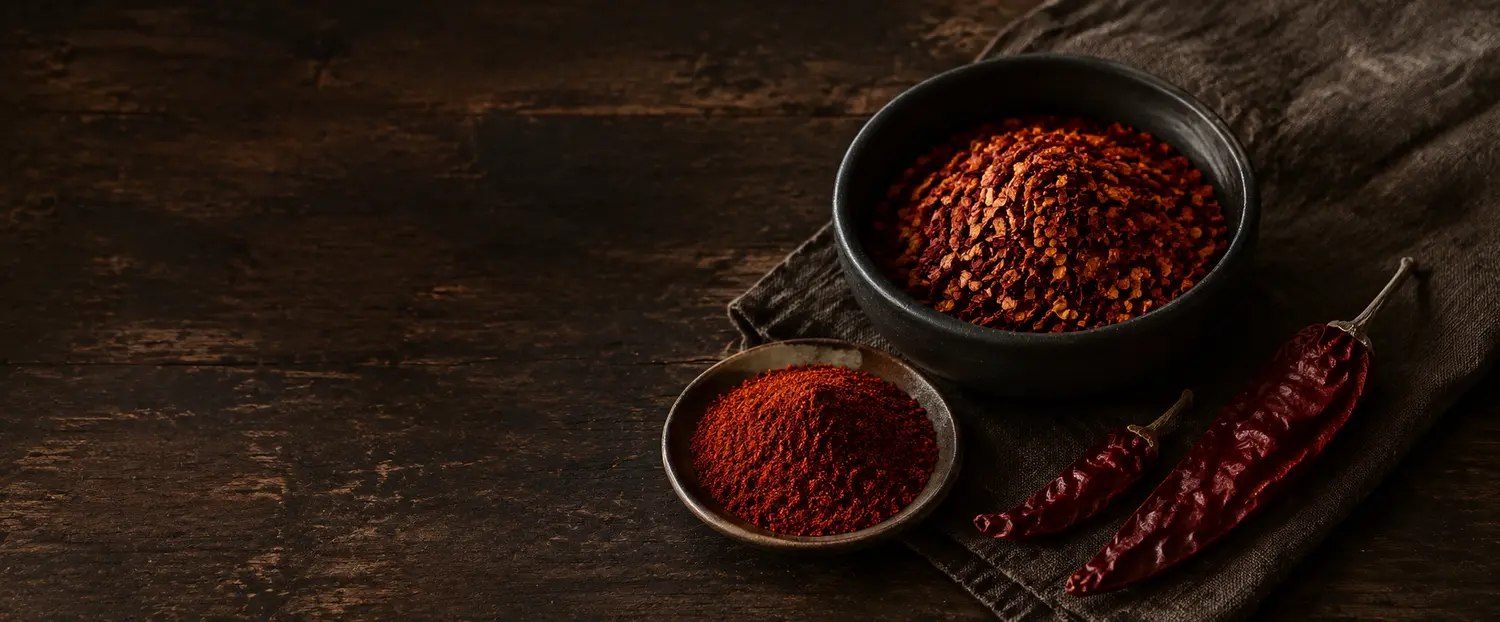
AI-generated illustration.
1059
What is it?
Dried chilli is Capsicum fruit dried and used whole, crushed, as flakes or ground into powder. It is not one spice with one flavour. Variety, ripeness, drying and the parts included in the grind determine what reaches the jar.
«Heat is only half the flavour.»
The story
Capsicum annuum has its botanical origins in central Mexico. From there, chilli travelled into kitchens worldwide and became so firmly established that it is easy to forget Indian, Thai and Korean chilli dishes use an ingredient from the Americas.
Flavour profile
Chilli can be fruity, earthy, smoky, tangy, sweetish or bitter as well as hot. Look for flavour as well as heat when choosing chilli. That makes it easier to find one that suits the dish.
Pairs well with
Tomatoes, beans, meat, chicken, fish, eggs, soups, stews, noodles, rice and grilled vegetables take chilli well. It works particularly well when the dish has some fat, liquid or sweetness to carry the flavour.
Start with less than you think, give the chilli a few minutes in the dish and taste again. Powder acts quickly; whole dried chillies take longer. Do not scorch powder in smoking oil. It gives a bitter flavour and unpleasant fumes in the kitchen.
Did you know?
Capsaicin activates a receptor that also responds to harmful heat. That is why chilli feels burning in your mouth even though it does not make the food a single degree hotter.
Common mistakes
The most common mistake is treating chilli as an endurance test. Another is adding more before the first dose has spread through the dish. Chilli should provide direction, warmth and personality, not turn dinner into a competition.
Know the difference
Pure ground chilli is dried chilli with no other ingredients. Codex permits seeds, placenta, calyx and stalk to be included in the grind, whereas ground paprika is made without those parts. A seasoning blend labelled “chilli” may contain several spices. Read the ingredients.
Fun facts
The seeds get blamed for the heat, but much of the capsaicin forms and accumulates in the pale placenta inside the fruit. Seeds can become hot through contact with it. Removing only the seeds will not remove all that heat.
Combines well with
Garlic, cumin, coriander seed, oregano, ginger, black pepper, paprika, cinnamon, lime and lemon. Try cumin and oregano in a bean stew, or ginger and lime with noodles. Choose according to what you are cooking.
Sapidus best friends
Tomato gives body, lime adds freshness and a little fat helps the flavour linger. A small pinch of sugar can round off a sharp sauce, but it will not make an overly hot sauce mild. Add chilli a little at a time.
What should you avoid?
Be cautious with lots of chilli in delicate fish, mild cheeses and fine sauces where subtle flavours need room. Do not combine several hot chilli types without knowing them. Three unknown heat levels do not automatically make one good flavour.
Storage
Keep chilli airtight, dark and dry, well away from steam and cooker heat. Whole dried chillies often retain their character better than fine powder. Buy quantities you will actually use: old chilli powder can stay hot long after its flavour has moved out.
6 claims linked to sources.
Source research was AI-assisted. Explore the background and follow the links to the sources.